The Evolution of Web 3.0

The Evolution of Web 3.0 redefines internet infrastructure around user-owned data, verifiable credentials, and programmable assets. It integrates cross-chain interoperability with standardized assets and scalable governance. Core technologies—blockchain, cryptographic identity, and AI-enabled collaboration—drive sovereign data control and modular trust. Interoperability and cross-chain messaging create resilient value flows, while governance scales transparently. The result points to a more efficient, privacy-preserving digital economy—yet practical implementations, risk management, and governance trade-offs remain to be resolved. The path forward invites closer scrutiny of concrete deployments and outcomes.
What Web 3.0 Is and Why It Matters
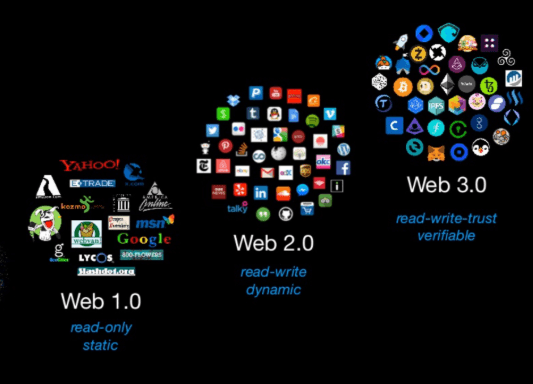
Web 3.0 refers to a decentralized internet paradigm that emphasizes user ownership, native digital assets, and interoperable protocols powered by blockchain technology.
The subtopic analyzes structural shifts, governance models, and value capture, highlighting measurable benefits like reduced single-point failures and enhanced user sovereignty.
Privacy concerns emerge alongside scalable identity solutions, while AI integration accelerates data collaboration and autonomous decisioning across permissionless networks.
Core Technologies Driving Web 3.0
Core technologies underpinning Web 3.0 integrate blockchain-based trust, decentralized storage, and programmable interoperability to enable user-owned data and asset transfer across ecosystems.
This framework supports scalable identity frameworks, secure verifiable credentials, and cross-chain messaging.
Decentralized identities enable portable authentication, while token standards standardize asset representation.
Data-driven signals inform governance and tooling, guiding developers toward interoperable, user-centric ecosystems with measurable, freedom-enhancing capabilities.
Ownership, Governance, and Interoperability
The progression from modular, blockchain-backed foundations to user-centric ecosystems centers on how ownership, governance, and interoperability intersect across decentralized networks.
Data indicates diverse ownership models emerge, enabling sovereign control while ensuring collaboration across layers.
Governance mechanisms evolve toward transparent, scalable decision processes, balancing residual centralization with communal input.
Interoperability accelerates resilience, enabling composable, cross-chain value flows for freedom-focused ecosystems.
Real-World Use Cases and Market Impacts
Real-world use cases for Web 3.0 span enterprise automation, decentralized finance, data sovereignty, and trusted digital identities, with measurable impacts on efficiency, resilience, and cost structures.
The trajectory emphasizes programmable money, incentive design, and cross chain bridges to reduce friction and elevate interoperability.
Decentralized identity and digital collectibles reinforce user autonomy, while data sovereignty enables compliant analytics, boosting transparent, scalable, cross-border value flows.
See also: The Evolution of User Interfaces
Frequently Asked Questions
How Will Web 3.0 Affect Daily Online Privacy for Users?
Web 3.0 will alter daily online privacy by reshaping data ownership and control; explorers expect privacy tradeoffs where enhanced user sovereignty competes with broader data exposure, while data sovereignty moves prioritize transparent permissions and auditable, consent-driven data usage.
What Are the Biggest Barriers to Mainstream Web 3.0 Adoption?
A tightrope walker surveys uncertainty, as barriers to mainstream Web 3.0 adoption include adoption fatigue and interoperability bottlenecks, hindering scale. The analysis is data-driven, forward-looking, technically rigorous, empowering freedom-oriented stakeholders to push interoperable, resilient architectures.
Can Web 3.0 Replace Centralized Cloud Services Entirely?
Web 3.0 cannot completely replace centralized cloud services; instead, it complements them. Data sovereignty and edge computation enable decentralized workloads, reducing reliance on single providers while empowering entities to distribute processing and storage closer to users.
How Will Token Incentives Influence User Behavior and Platform Trust?
Token incentives could recalibrate platform behavior by rewarding constructive actions, boosting user trust as economic alignment aligns participant goals; however, misaligned incentives risk exploitative dynamics, requiring robust governance to sustain data-driven, freedom-oriented ecosystems.
What Regulatory Risks Could Reshape Web 3.0 Development?
Regulatory risks could reshape Web 3.0 through heightened enforcement and cross-border compliance pressures, prompting institutions to adopt regulatory sandboxing and standardized disclosures; forward-looking analyses indicate adaptive architectures, transparent governance, and interoperable protocols to sustain innovation and freedom.
Conclusion
Web 3.0 represents a data-driven shift toward user ownership, transparent governance, and interoperable ecosystems. Early technical gains—verifiable credentials, cross-chain messaging, and programmable assets—indicate scalable identity and asset portability across platforms. Market signals suggest accelerating adoption driven by AI-enabled collaboration and privacy-preserving analytics. While challenges remain in onboarding, standards, and regulation, the trajectory points to resilient value flows and sovereign data control, like a well-orchestrated orchestra, where disparate instruments harmonize into an adaptive, autonomous internet.