Layer 1 Vs Layer 2 Blockchains Explained

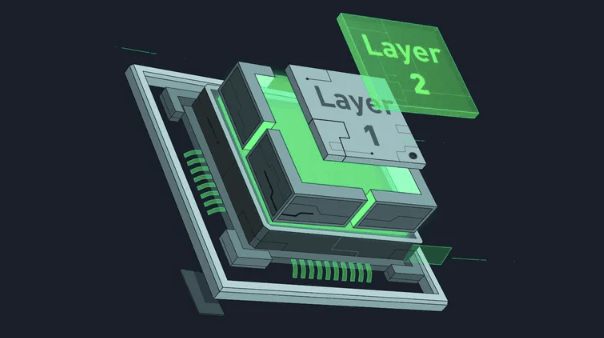
Layer 1 provides the base security, sovereignty, and governance of a network, while Layer 2 adds off-chain processing to increase throughput and reduce costs. Rollups, sidechains, and state channels each trade data availability and finality for speed, with results settled back to Layer 1. Security hinges on validators and bridges, creating clear trade-offs between ultimate settlement and ecosystem flexibility. The choice for a DApp hinges on governance, interoperability, and risk tolerance—a decision that hinges on further evidence and context.
What Layer 1 and Layer 2 Do for You
Layer 1 and Layer 2 technologies each address distinct challenges in blockchain scalability and usability. Layer 1 stabilizes base security and consensus, while Layer 2 accelerates operations off-chain. Together, they influence fast transaction times, low fees, and participant choice.
Community governance guides evolution, and cross chain interoperability enables seamless asset movement, preserving freedom without sacrificing trust or accountability.
How Scaling Tech Works: Rollups, Sidechains, and State Channels
Rollups, sidechains, and state channels represent three primary approaches to scaling blockchain workloads by processing transactions off the main chain and then settling results back to it. They differ in data availability, finality, and trust assumptions, shaping scaling tradeoffs. Rollups emphasize throughput; sidechains offer sovereignty; state channels optimize ephemeral interactions. Security considerations hinge on validators, bridges, and dispute mechanisms.
Pros, Cons, and Trade-Offs for L1 vs L2
A comparative assessment of Layer 1 (L1) and Layer 2 (L2) solutions reveals distinct design goals, security models, and operating envelopes that shape their respective trade-offs. L1 emphasizes robust base security and sovereignty, while L2 prioritizes throughput, cost, and composability. Trade-offs include scalability myths versus verifiable gains, and clear security tradeoffs between ultimate settlement guarantees and ecosystem flexibility.
How to Decide Which Layer To Use for Your DApp
Choosing the appropriate layer for a DApp requires aligning technical requirements with the distinct guarantees and costs of L1 and L2 architectures. Decision criteria include scalability, cost predictability, and security guarantees, balancing dapp deployment timelines against user expectations. Analysts emphasize data availability, settlement finality, and interoperability, while acknowledging user experience trade offs and latency. The result is a defensible, evidence-based layer choice. Freedom-friendly yet rigorous.
See also: KYC and AML in Crypto Explained
Frequently Asked Questions
How Do L1 and L2 Security Models Differ in Practice?
The security models differ: L1 relies on base-layer security assumptions and full-chain consensus, while L2 leverages validity proofs and dispute resolution, trading some direct security for scalability. This reflects scalability tradeoffs and evolving security assumptions in practice.
Can L2S Become L1S Over Time Through Evolution?
L2s can evolve toward L1-like status through broader adoption and security model convergence, yet fundamental tradeoffs persist: scalability tradeoffs may erode decentralization, while security models adapt, highlighting tension between freedom and verifiable robustness in an expanding ecosystem.
Do L2S Solve Finality Delays for Users?
Yes, L2s can reduce perceived finality delays by delivering faster confirmations, though finality remains anchored to layer security; cross chain messaging improves coordination, while limitations persist in cross-chain proofs and bridge trust.
Are There Hidden Costs in L2 Transaction Routing?
Hidden costs may arise in L2 routing, but evidence suggests they are modest and variable; routing latency is the dominant factor, not universal hidden fees, with performance tied to underlying network conditions and user choice.
How Do Governance and Upgrades Vary Between L1 and L2?
Governance and upgrades differ: Layer 1 exhibits centralized on-chain rules and slower, consensus-driven changes, while Layer 2 often relies on protocol flexibility and off-chain coordination. This divergence fosters governance drift and upgrade fatigue in scaling networks.
Conclusion
Despite the promises of faster transactions and cheaper fees, Layer 2’s speed comes with visible compromises: data availability, finality guarantees, and security assumptions shift away from the base Layer 1. Ironically, the very scalability that enables rapid DApps also amplifies complexity and trust dependencies—bridges, validators, and cross-layer proofs become new bottlenecks. In short, Layer 2 delivers efficiency at the cost of deeper sovereignty; choose L1 for security, L2 for pragmatism, never for absolutes.